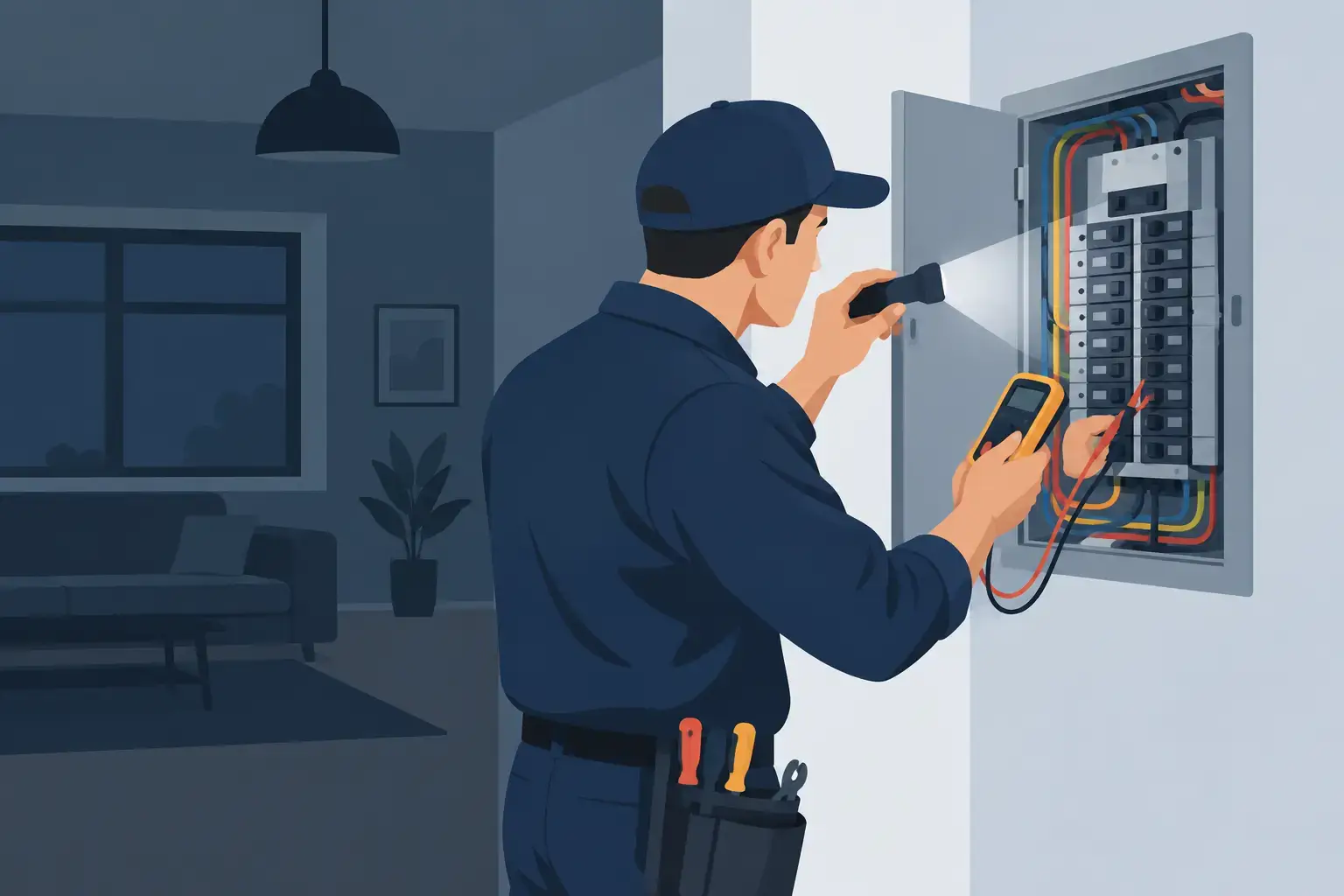
Electrical Fault Finding When Power Fails
A circuit that keeps tripping at teatime, a socket that has suddenly gone dead or lights that flicker without warning can turn a normal evening into a worry. Electrical fault finding is the process of working out exactly why that problem has happened, making the installation safe and repairing the actual cause rather than guessing at a quick fix.For homeowners and landlords across Fife and central Scotland, the key question is usually simple: is this safe to wait for, or do I need a sparky now? The answer depends on the symptoms. A single failed light fitting can often be booked in. Burning smells, buzzing, shocks, repeated tripping or a loss of power should be treated as urgent.When an electrical fault needs urgent attentionIf you can smell burning, see smoke, notice scorch marks, hear crackling from a socket or consumer unit, or receive an electric shock, switch off the power at the consumer unit if it is safe to do so. Do not touch damaged accessories, exposed wiring or anything that is wet. Keep people away from the area and call an emergency electrician.The same applies if a circuit will not stay on after you reset it. A circuit breaker or RCD trips to protect you against a fault. Resetting it once can be reasonable if there are no signs of damage and you have unplugged the items on that circuit. Repeatedly forcing it back on is not a repair. It can leave a developing fault energised and make the situation worse.Water and electrics need extra care. A leak near a light fitting, socket, shower circuit or consumer unit should be dealt with promptly. Do not investigate inside the fitting or attempt to dry electrical parts yourself. Isolate the supply where safe and arrange an electrician.What electrical fault finding involvesGood fault finding is not just replacing the item that has stopped working. The visible problem may be the result of a loose connection, a damaged cable, moisture ingress, an overloaded circuit, a faulty appliance or an issue elsewhere on the circuit.A qualified electrician begins by listening to what has happened. Details matter: whether the fault began after using a particular appliance, during heavy rain, after DIY work, or when a certain light was switched on. They will then make the installation safe, inspect the relevant circuit and carry out appropriate electrical tests to narrow down the cause.That may include testing the consumer unit, checking sockets and switches, isolating appliances, examining light fittings and looking for damage in accessible wiring. The aim is to identify the fault accurately, then explain the repair in plain terms. If further remedial work is needed, you should know what it is, why it is required and what happens next.Why a tripping RCD is not always a consumer unit faultAn RCD monitors for electricity leaking to earth and disconnects the circuit quickly when it detects a dangerous imbalance. It can trip because of a faulty kettle, washing machine or outdoor tool, but it can also point to damaged wiring, a damp exterior fitting or a deteriorating accessory.This is why changing the breaker or RCD without testing is the wrong approach. The protective device may be doing exactly what it is supposed to do. Electrical fault finding establishes whether the issue is an appliance, a single circuit or part of the fixed installation before any repair is made.Common faults in homes and rental propertiesSome faults are more common than others, particularly in older homes, converted properties and houses that have been extended over the years.A socket may stop working because of a failed connection behind the faceplate, damage to the cable, a tripped circuit or a fault further along the ring or radial circuit. If the socket feels warm, is cracked, makes a noise or has a burning smell, leave it alone and arrange urgent help.Flickering lights are often caused by a failing lamp, loose connection or unsuitable dimmer switch. LED upgrades can expose a dimmer that is not compatible with the new lamps. That is usually straightforward to sort, but persistent flickering across several lights can also indicate a circuit issue that needs investigation.Outdoor faults frequently appear after bad weather. Water can enter an exterior light, junction box, garden socket or cable connection. Exterior electrics need the correct equipment, sound seals and proper protection. A temporary dry spell does not prove the problem has gone away.In rental homes, tenants should report tripping circuits, damaged sockets and failed fixed lighting promptly. Landlords should avoid treating recurring faults as minor annoyances. A repeated issue can lead to a more disruptive failure later, and it may affect the condition of the electrical installation.What you can do safely before the electrician arrivesYou do not need to diagnose the fault yourself. A few safe checks can help without putting you at risk. First, note what has lost power and whether other rooms are affected. Check whether the consumer unit has a breaker or RCD in the off position. If there is no damage, smell or water nearby, unplug portable appliances on the affected circuit before trying one reset.If it stays on, reconnect appliances one at a time. If it trips again when a particular appliance is plugged in or switched on, leave that appliance disconnected. This information can save time when the electrician arrives.Do not remove socket fronts, light fittings or consumer unit covers. Do not replace fuses with a larger rating, tape over damaged cables or run extension leads through doorways as a long-term workaround. Extension leads are useful for a short, supervised need, but they are not a substitute for repairing a failed socket circuit or fitting an additional socket.Photographs of visible damage can be useful, provided you can take them without getting close to a hazardous area. When you call, explain whether anyone has had a shock, whether there is a smell or smoke, what has tripped and whether the fault is affecting heating, cooking, lighting or essential equipment.Fast repairs matter, but so does finding the causeWhen the power is off, speed matters. So does avoiding a return visit for the same problem. A properly stocked electrician can often replace common failed accessories, breakers, fittings and damaged components during the first visit. However, not every fault has a one-hour answer.A cable fault hidden beneath floors or inside walls may need further testing, access work or a planned repair. An older installation may reveal more than one issue once testing begins. The right approach is to restore safety and essential power where possible, be clear about any limitations, and set out the remedial work needed without jargon.West Fife Sparky provides 24-hour emergency call-outs for household electrical faults, with a focus on rapid local attendance and clear next steps. For a sudden loss of power, a dangerous socket or a circuit that will not stay on, calling early is usually better than waiting to see whether it settles down.Reducing the chance of future faultsYou cannot prevent every electrical problem, but sensible maintenance makes surprises less likely. Have damaged switches, loose sockets and unreliable light fittings repaired rather than tolerated. Use exterior fittings and sockets designed for outdoor conditions. Avoid overloading extension leads, particularly with heaters, tumble dryers, kettles and other high-load appliances.If you are renovating, adding a home office, fitting a hot tub, upgrading kitchen appliances or improving garden lighting, make sure the circuits are suitable for the extra demand. A few well-placed new sockets or a properly designed exterior supply is safer and tidier than relying on adaptors and leads.Electrical inspection and testing is particularly worthwhile when buying an older property, taking on a rental home, planning major alterations or dealing with repeated nuisance tripping. It gives you a clearer picture of the condition of the installation before a small problem becomes an urgent one.If something feels wrong with your electrics, trust that instinct. Switch off what you safely can, keep clear of the affected area and get a qualified local electrician to find the cause properly.