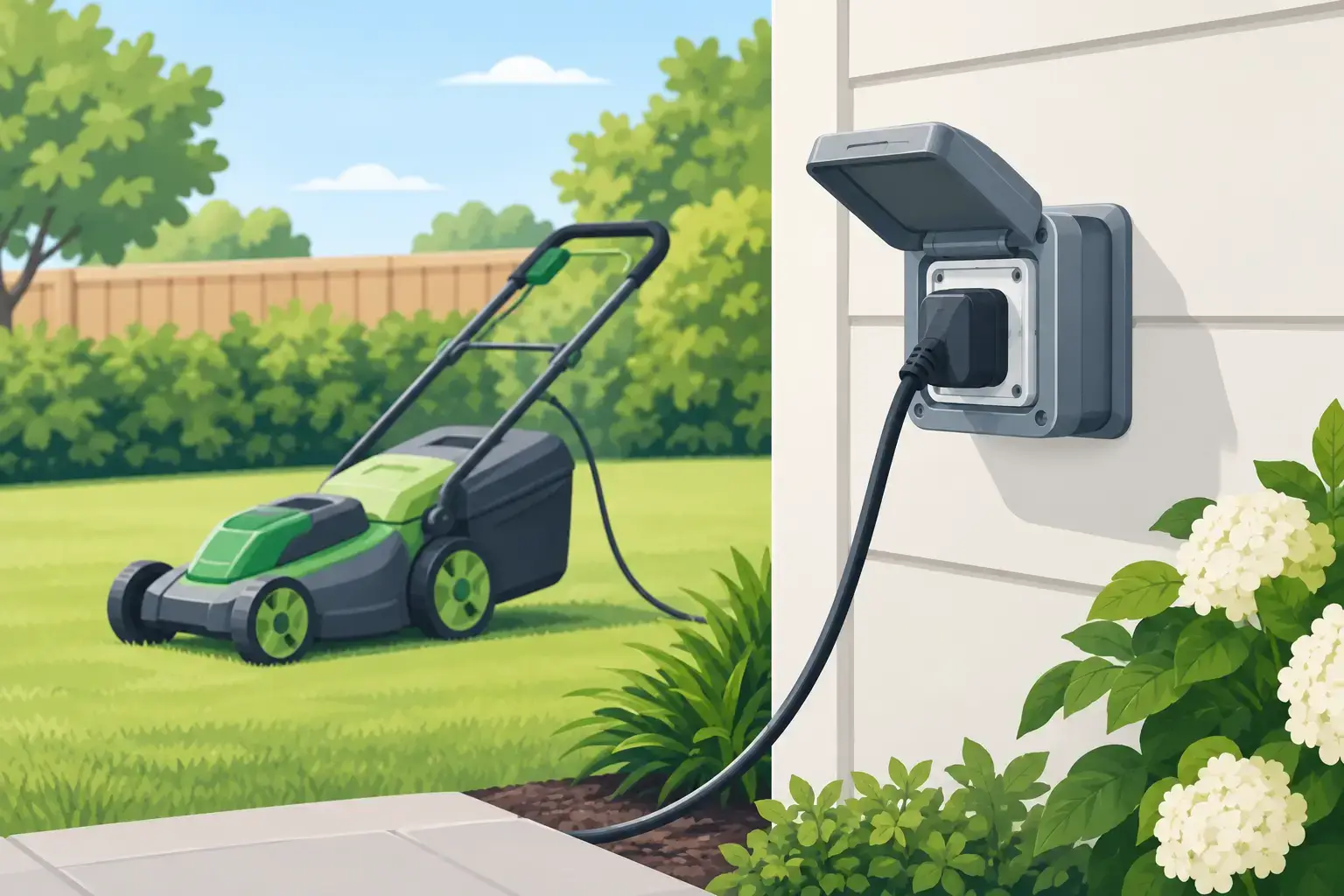
A trailing extension lead through a partly open window might get the mower running, but it is not a proper long-term answer. Outside sockets give you safe, convenient power where you actually need it - for the garden, driveway, shed or patio - without creating trip hazards or relying on indoor sockets that were never meant to serve the outdoors.
For homeowners and landlords across Fife and central Scotland, this is often a small upgrade that makes a real difference. The right installation is discreet, weatherproof and properly protected, so you can use your outdoor space without wondering whether the electrics are up to the job.
What outside sockets are useful for
Most people first think of lawnmowers, hedge trimmers and pressure washers. Those are good reasons to fit an exterior socket, particularly if you are tired of uncoiling a lead from the kitchen every weekend. But a well-positioned socket can make many everyday jobs simpler.
It can power garden lighting transformers, pond pumps, Christmas displays, electric barbecues, battery chargers and tools for a DIY project. At the front of a property, it can be useful for a car vacuum, driveway work or seasonal lights. Near a garage or shed, it can provide a safer supply for occasional tools without running a cable across a path.
The best location depends on how you use the space. A socket beside the back door is handy for quick jobs, while one further down the garden may be more useful for a patio or shed. Sometimes two sockets in sensible locations are better than one socket that still leaves you relying on a long extension lead.
Outside sockets need more than a cover
An outdoor socket should not simply be a standard indoor fitting placed on an external wall. It needs an enclosure designed to cope with rain, damp, dirt and changing temperatures. The lid should close securely around a plugged-in lead where the chosen fitting is designed to allow this, helping to keep water away from the electrical connections.
Just as important is the protection behind the socket. External circuits need suitable RCD protection, which is designed to disconnect the supply quickly if it detects a fault to earth. This is a vital extra layer of protection where cables, tools and appliances may be exposed to wet ground or outdoor conditions.
A qualified electrician will also consider the condition and capacity of your existing consumer unit, the route for the cable, earthing arrangements and whether the circuit needs to be dedicated. There is no single answer for every property. A socket for a mobile phone charger on a covered patio is a different job from supplying heavy garden equipment or equipment in a detached outbuilding.
The installation should be tested once complete. That confirms the protective measures are operating as intended and gives you confidence that the new point has been fitted properly, rather than just looking tidy on the wall.
Why an extension lead is not a substitute
Extension leads have their place for occasional, short-term use, but they create avoidable problems outside. A cable across a doorway, lawn or path is easy to damage with a mower, pinch in a door or leave sitting in a puddle. It can also become a trip hazard for children, visitors and anyone carrying items through the garden.
Overloading is another concern. A reel left wound up while supplying high-demand equipment can overheat. Connecting several adaptors together, especially outdoors, adds further risk. If you regularly need power outside, a fixed socket is the safer and more practical route.
Choosing the right position for outside sockets
Before fitting begins, think about the tasks you want the socket to handle. This avoids the common mistake of installing one at the nearest wall, then finding it is too far from the patio, greenhouse or driveway.
A good position is accessible without being vulnerable to knocks, standing water or constant spray. It should not be hidden behind furniture or placed where a gate, bin or garden tool can repeatedly hit it. For a patio, mounting it at a practical height near the seating or cooking area usually works well. For garden maintenance, position it so the cable can reach the areas you work on without crossing main walkways wherever possible.
Cable routes matter too. An electrician may be able to run cabling neatly through the property or externally in suitable containment, but the cleanest route is not always the safest or most practical one. Walls, insulation, decking, paving, drains and the location of your consumer unit can all affect the approach.
If you are planning landscaping, a new patio, a garden room or fencing, arrange the electrical work early. It is far easier to plan a socket and cable route before new surfaces are laid than to lift finished work later.
Power for sheds, garages and garden rooms
A single exterior socket can be ideal for occasional garden use, but a shed, garage or garden room often needs a different solution. If you want lighting, multiple sockets, heating, a fridge, power tools or a home office setup, it may need its own properly designed supply rather than an outdoor socket feeding a chain of extension leads.
This is where the intended use really matters. A basic timber shed used for storage has very different electrical needs from an insulated garden office used every day. The electrical load, cable run, building construction and protective devices must all be considered before work starts.
Do not assume an existing cable to an outbuilding is safe simply because it still works. Older supplies may have unsuitable cabling, inadequate protection or connections that have deteriorated with damp and movement. If sockets are loose, lights flicker, fuses trip or there are signs of scorching, stop using the supply and have it checked.
Common signs an existing outdoor socket needs attention
Outdoor fittings take more punishment than indoor accessories. UV exposure, frost, rain, impact and insects can all affect covers, seals and cable entries over time. A damaged socket should not be ignored just because it is still providing power.
Look out for a cracked housing, loose cover, missing screws, water inside the enclosure, a socket that trips the RCD, damaged cable, discolouration or warmth around the fitting. Also take notice if the socket only works intermittently. That can point to a loose connection, moisture ingress or a problem elsewhere on the circuit.
Never try to dry out, tape up or repair an outdoor socket yourself. Switch off the circuit if you can do so safely, keep people away from the area and arrange for an electrician to investigate. If there is burning smell, smoke, visible damage to wiring or repeated tripping affecting other parts of the home, treat it as an urgent electrical issue.
A straightforward installation process
A proper installation starts with a discussion about where you need power and what you will use it for. The electrician can then assess the proposed position, inspect the existing electrical installation and explain the sensible options. If additional work is needed - for example, an upgrade to protection at the consumer unit or a more suitable supply route - that should be made clear before the job goes ahead.
The socket is then fitted using suitable outdoor equipment, with cabling installed and protected appropriately for its route. Once the work is complete, the circuit is tested and the operation of the protective device is checked. You should also be shown how to test the RCD using its test button and how to keep the socket in good condition.
For rental properties, this practical approach helps landlords provide a safer amenity without creating an unmaintainable setup. Keep the fitting accessible for periodic checks, and ask tenants to report damage or tripping rather than repeatedly resetting it.
Looking after your outdoor power point
Outside sockets are low-maintenance, but they are not fit-and-forget. Check the cover and enclosure occasionally, particularly after severe weather or if the area has been knocked by gardening equipment. Keep the lid shut when the socket is not in use, and avoid leaving plugs connected through long spells of wet weather unless the arrangement is specifically suitable for it.
Use outdoor-rated equipment and leads in good condition. Bring portable appliances indoors after use where possible, rather than leaving chargers, lights or tools exposed to the elements. If an RCD trips, do not keep resetting it until it stays on. Unplug the appliance, stop using the socket and get the cause checked if the issue continues.
A well-fitted outdoor socket should make life easier, not add another electrical worry. Whether you need power for the garden, driveway, shed or a new patio, West Fife Sparky can assess the job properly and fit a solution that suits how you use your home.